

Description
The Fire Within, The Radish of Ancient Heat and Honorable Intensity
Wasabi is not a radish you grow by accident.
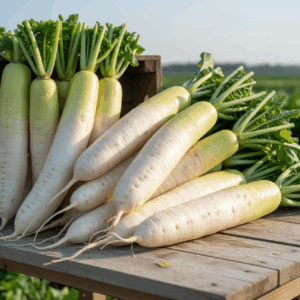
It is a radish with a flame inside of it. It is a heat that is sharp, sudden, and strangely clarifying. In cool soil it forms a pale root: green-shouldered, white-bodied, modest-looking. When you cut it you discover the truth. The flesh is crisp and fine-grained, and the bite is immediate. It has a sinus-clearing intensity that wakes the whole face, the whole mind. It’s not the playful pepper of a breakfast radish. It’s the kind of heat that makes you pause, laugh, and respect it. Once finished, you will reach for another slice because it makes you feel alive.
This is the radish for gardeners who want the full expression of radish character. A radish that is not softened, not sweetened, not made polite. Wasabi is fierce in the way certain foods are fierce: purposeful, transformative, and deeply satisfying when you understand what it is. Grow it and you’re growing a condiment as much as a vegetable: a root that can be grated, sliced, pickled, or stirred into broth to bring that legendary, palate-awakening spark to the table.
A whisper of history
Radishes arrived in Japan centuries ago via China and Korea, and Japanese growers shaped them into a vast family of forms. They were roots for winter stores, roots for soups, roots for pickles, and roots bred specifically for heat. That heat is part of a culinary philosophy: that food should awaken the senses, that intensity is not a flaw but a virtue.
What You’ll Grow
- Plant type: Cool-season annual root crop
- Growth habit: vigorous rosette; substantial foliage
- Root size: typically 10–15 cm (4–6 in) long and 2.5–4 cm (1–1.5 in) wide (larger in ideal conditions)
- Shape: cylindrical, straight, smooth
- Skin colour: pale green to white (often greener at the shoulders)
- Flesh: crisp, white, fine-grained
- Flavour: intensely peppery, sinus-clearing, wasabi-like heat
Days to maturity: typically 50–60 days.
Growing Instructions
Wasabi Japanese is at its best when it grows steadily in cool weather. Give it depth, moisture, and time, and it will return a root with power.
When to Plant (Best Timing)
- Best for Canada: sow in mid-to-late summer for a fall harvest (cool nights deepen flavour and keep texture crisp)
- You can also sow in early spring for late spring harvest, but fall-grown roots are often the most consistent
Timing tip: aim for the main bulking period to happen as temperatures cool. In many Canadian regions, sowing in July–August sets you up for harvest in September–October.
Direct Sowing (Recommended)
- Sow seeds 1–1.5 cm (1/2 in) deep
- Space seeds 5–7.5 cm (2–3 in) apart
- Rows 30–45 cm (12–18 in) apart
- Thin to 7.5–10 cm (3–4 in) spacing once true leaves appear (this is where the root size comes from)
Thinning matters: crowded plants make smaller roots and can increase stress (which can mean tougher texture).
Site + Soil (Depth = Better Roots)
- Full sun is ideal (6–8+ hours)
- Soil should be loose, fertile, and well-drained
- Prepare to a depth of 25–30 cm (10–12 in): remove rocks, break compaction, and work in compost
- Raised beds are excellent if your soil is heavy
For straighter roots: avoid fresh manure and chunky, uncomposted material (forking risk).
Watering (The Difference Between Crisp and Harsh)
- Keep moisture consistent: about 2–2.5 cm (3/4–1 in)/week
- Uneven watering can cause pithiness, splitting, or a harsher bite
- Mulch helps keep soil cool and moisture steady
Feeding
- Compost at planting is usually enough
- In poor soils, a balanced feed at planting can help
- Avoid heavy nitrogen (lush tops, smaller roots)
Weed Control
- Weed early and consistently. Competition slows root development
Pest Notes
- Watch for flea beetles and root maggots
- Row cover can help, especially early; keep beds clean and weed-free
Troubleshooting (Quick Fixes)
- Pithy/woody roots: heat stress, uneven watering, or leaving roots too long
- Forked roots: rocky/compacted soil or fresh manure
- Splitting: dry spell followed by heavy watering/rain
- Too aggressive heat: stress + heat; fall crops are often cleaner and more balanced
Harvesting (When the Fire is Perfect)
- Harvest at 10–15 cm (4–6 in) long and 2.5–4 cm (1–1.5 in) wide
- Loosen soil and pull gently (don’t snap the root in compact ground)
- Tolerates light frost, and flavour often sharpens beautifully as nights cool
Harvest tip: don’t let it linger too long once it reaches size. Peak texture is crisp and juicy.
Preserving + Storage
- Remove greens before storing
- Refrigerate in a bag/container with a little humidity
- Stores for weeks thanks to its size and firmness
Preserving ideas:
- Quick pickles for bright heat
- Fermented pickles for deeper tang and complexity
- Slice thin and keep in cold water briefly before serving for extra snap
Culinary Notes: The Radish That Becomes a Condiment
Wasabi is a radish you use like a spark.
Fresh (Respectfully)
- Slice paper-thin and eat in small amounts—the heat builds as you chew
- Pair with rich foods (fish, pork, oily noodles, creamy sauces) for balance
Grated (Wasabi-Like)
- Grate finely for a fresh, aromatic condiment
- Serve alongside sushi-style bowls, grilled fish, rice, or dumplings
Pickled
- Pickle with vinegar, salt, and a touch of sugar; add ginger, garlic, chili, or mustard seed
- A powerful palate-cleanser and sandwich upgrade
Cooked (Where Heat Softens)
- Add to soups and broths—it mellows, turning warm and complex
- Stir-fry slices for crisp-tender bite
- Braise with soy, ginger, and garlic for depth
Don’t Waste the Greens
- Sauté like other hardy greens
- Stir into soups
- Use in pesto with lemon and garlic
Canadian Climate Notes + Growing Zones
Wasabi is a cool-season radish that shines in Canadian fall gardens.
- Sow in late summer so roots size up as temperatures cool
- Cool nights keep texture crisp and flavour clean
- Harvest before hard freeze in colder regions; in milder areas, you can hold longer
Growing zones: 2–9 (annual; cool-season crop).
Seed Saving
Radishes are biennial for seed: they must bolt and flower.
Isolation & Cross-Pollination
Radishes cross with other radish varieties.
- For purity, isolate by 800 m (1/2 mile) or grow only one flowering radish variety
How to Save Seed
- Choose a few of the best roots and leave them in the ground (or replant) to bolt
- Let plants flower and form pods
- Harvest pods when they turn brown and dry
- Dry fully, then thresh pods to release seed
- Store cool and dry
Seed viability: typically 4–5 years.
Wasabi Japanese is the fire you grow yourself—a pale root with a fierce heart, for gardeners who want their radishes honest, intense, and unforgettable.
Reviews
There are no reviews yet.