
How a quest for the perfect tomato transformed berry-sized fruits into two-handed giants, travelled from Andean slopes to Depression-era ingenuity, and became the symbol of Canadian summer abundance
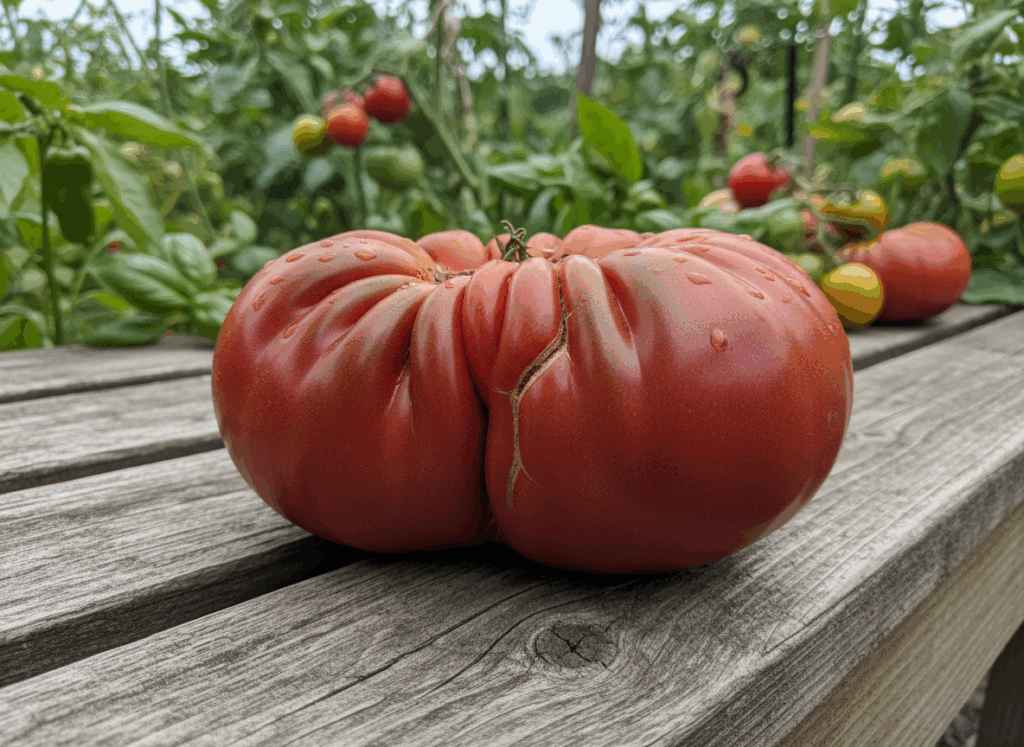
The Tomato of Dreams
There is a tomato that defines summer. A tomato so large it requires two hands to hold. A tomato so juicy it drips down your chin and stains your shirt. A tomato so perfect it makes you understand why gardeners wait months, waiting and hoping for even a single ripe fruit.
This is the beefsteak tomato. The summer giant. The tomato of childhood memories and adult aspirations. The variety that produces slices large enough to cover an entire sandwich, that tastes like summer itself, that reminds you with every bite why homegrown tomatoes are worth the wait.
This is the tomato that fills backyard gardens with anticipation. This is the pinnacle of the tomato breeder’s art.
Born in Mountains, Transformed by Hands
The story of beefsteak tomatoes begins 10,000 years ago in the Andes mountains of South America, where wild tomato species produced fruits the size of berries. They were tiny, bitter, barely recognizable as the giants we grow today.
Indigenous peoples in Mexico domesticated tomatoes over thousands of years, selecting for larger fruits and better flavour. Generation after generation, they chose the best, saved the seeds, and planted again. Slowly, tomatoes grew from berry-sized to cherry-sized to plum-sized.
When Spanish conquistadors arrived in the 16th century and encountered tomatoes in the bustling Aztec markets of Tenochtitlan, they were captivated by these strange fruits. They carried seeds back to Europe, where tomatoes were initially grown as ornamental curiosities. They were beautiful but suspect.
Many Europeans believed tomatoes were poisonous. After all, they belonged to the nightshade family, related to deadly belladonna. For decades, tomatoes were admired but not eaten, grown in gardens as exotic decorations from the New World.
But curiosity and hunger eventually won. By the 18th century, tomatoes had won over European and American gardeners. They were eaten fresh, cooked into sauces, and celebrated for their flavour. Yet they remained relatively small. They were cherry-sized to perhaps plum-sized, nothing like the giants we know today.
The Quest for Giants
The transformation to beefsteaks began in the late 19th century in America, during the golden age of seed catalogues.
This was an era of agricultural ambition and competition. Seed companies like Burpee, Ferry, and Henderson competed fiercely to introduce the biggest, most productive, most flavorful varieties. Gardeners became amateur plant breeders, saving seeds from their largest fruits, planting them the next year, selecting again.
Generation after generation, they chose size. They chose flavour. They chose that meaty, low-seed quality perfect for slicing. They chose fruits so substantial that slices resembled cuts of beef in size, colour, and substance.
This is where the name “beefsteak” was born.
“Beefsteak” emerged as a category in the early 20th century. It was not a single variety but a type, as any large, meaty, slicing tomato with flesh so substantial it evoked beef. This was the tomato everyone wanted: the variety that could feed a family, that could cover a sandwich, that could make a meal.
Legendary varieties appeared, each one pushing the boundaries of what a tomato could be.
Ponderosa arrived in the 1890s, one of the first true beefsteaks, producing fruits over a pound. Gardeners marvelled at its size, its meaty flesh, its rich flavour.
Mortgage Lifter emerged in the 1930s-1940s and was developed by M.C. Byles, a West Virginia radiator repairman with no formal plant breeding training. He had an eye for excellence and a need for income during the Great Depression. He crossed the largest tomatoes he could find, selected the best offspring, and repeated the process for six years. The result was a tomato so large, so productive, so sought-after that he sold plants for $1 each (a substantial sum during the Depression). He allegedly paid off the $6,000 mortgage on his house. The tomato earned its name honestly.
Countless other beefsteaks followed, bred by seed companies and home gardeners pursuing the perfect tomato: larger, meatier, sweeter, more productive.
Crossing North
Beefsteak tomatoes made their way to Canada through the same networks that brought all heirloom vegetables north: seed catalogues, immigrant families, gardening enthusiasts, and the simple human desire to grow the best food possible.
Canadian gardeners, always seeking varieties that could thrive in shorter growing seasons and cooler climates, recognized immediately that beefsteaks were worth the effort.
Yes, they required warm weather. Tomatoes are heat-loving plants that originated in tropical mountains and were domesticated in Mexico. Yes, they needed long growing seasons,100 days or more from transplant to first ripe fruit. Yes, they required staking, pruning, and attention.
But Canadian summers, when they arrive, are glorious for tomatoes. The long daylight hours of northern latitudes compensate for cooler temperatures. Tomatoes grow vigorously, photosynthesize relentlessly, and produce abundantly when given adequate heat and support.
Canadian gardeners learned to start beefsteak tomatoes indoors in March or April, giving them a head start before transplanting into warm soil in late May or early June. They learned to choose the warmest, most protected spots in their gardens, such as south-facing walls, sheltered corners, and anywhere that captured and held heat.
They learned to stake plants tall and strong, to prune suckers for better air circulation and larger fruits, to water deeply and consistently, to wait patiently for green fruits to slowly swell and ripen.
And when the first beefsteak tomato of the season finally ripened, it was worth every bit of effort.
The Promise of Abundance
In Canadian gardens, beefsteak tomatoes represent optimism.
They represent the optimism of spring planting, when tiny seedlings with delicate leaves promise to become 6-foot giants laden with fruit.
They represent the patience of summer tending, when you water, stake, prune, and watch green fruits slowly swell, waiting for that first blush of color that signals ripeness is near.
Each enormous fruit becomes a celebration. A tomato sandwich with thick slices, mayonnaise, salt, and pepper on soft white bread. It was simple, perfect, summer on a plate. A Caprese salad with fresh mozzarella, basil from the garden, olive oil, and balsamic vinegar. Thick slices on burgers. Chopped into salsa and sliced with salt.
A Living Legacy
When you plant beefsteak tomato seeds in your Canadian garden, you are growing more than a vegetable. You are planting 10,000 years of domestication, from wild Andean berries to Mexican cultivation to Spanish introduction to Europe to American obsession.
You are planting the golden age of seed catalogues, when companies competed to introduce the biggest and best.
You are planting Depression-era ingenuity, when a radiator repairman bred a tomato good enough to pay off his mortgage.
This is the tomato of dreams. This is the summer giant. This is the beefsteak.
This is why we garden. This is why we wait. This is the taste of summer, grown by your own hands.
To lay some seeds in a nice warm spot, follow this link.