
How a mysterious squash with pasta-like flesh appeared in the 20th century, captivated a generation, and became a Canadian garden staple
The Moment of Magic
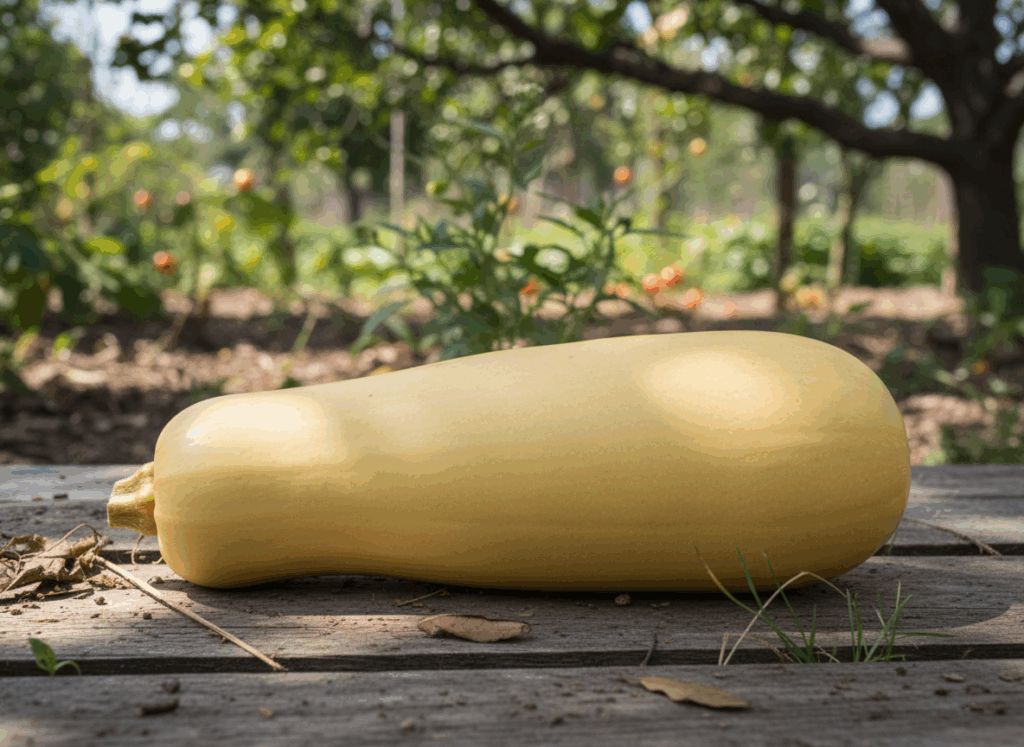
Some vegetables seem like magic, that defy expectation, that make you wonder how such a thing is even possible. Spaghetti Squash is such a vegetable.
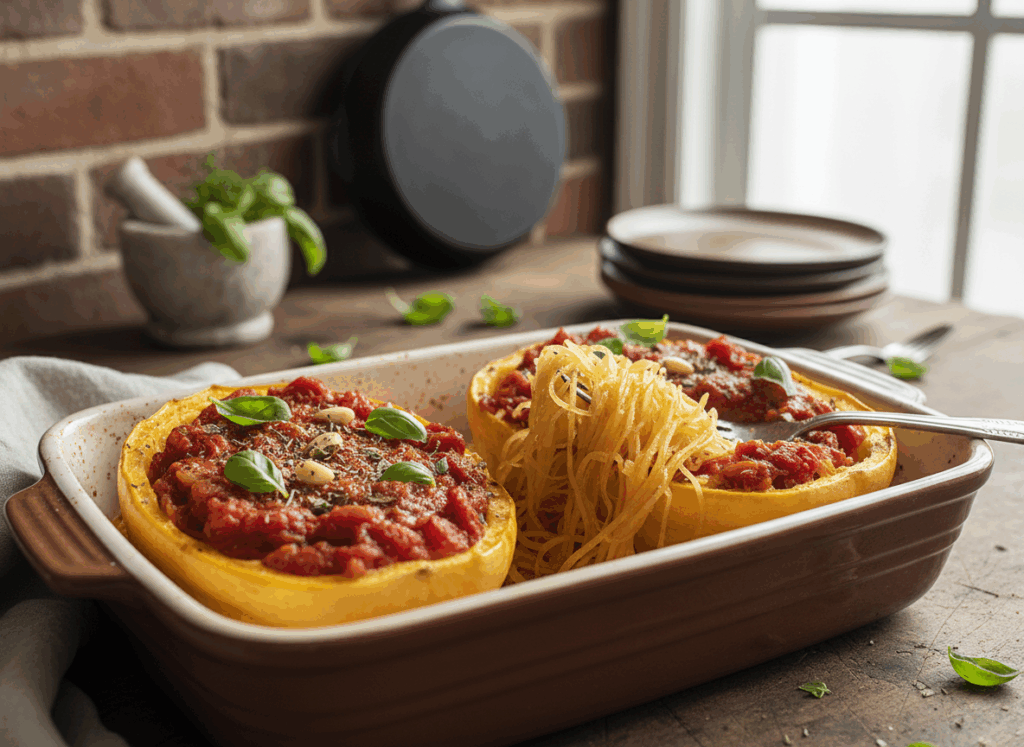
Cut open a cooked spaghetti squash and drag a fork through the flesh. Something miraculous happens. The interior separates into long, golden strands that look precisely like pasta, have the texture of al dente spaghetti, can be twirled on a fork, dressed with sauce, and served to children who don’t even realize they’re eating squash.
This is vegetable alchemy. This is nature performing culinary magic.
It’s real. And it’s always miraculous.
The Mystery of Origins
The true origins of spaghetti squash are surprisingly mysterious. Unlike most heirloom vegetables with clear historical lineages stretching back centuries or millennia, spaghetti squash appears suddenly in the historical record in the mid-20th century with very little documentation of where it came from or how it was developed.
This is strange. This is unusual. Most vegetables have stories, tales of ancient cultivation, of careful selection over generations, of migrations across continents. But spaghetti squash? It simply appears, as if by magic, with its miraculous stringy flesh and no clear explanation of how it came to be.
What we know for certain: Spaghetti squash is a variety of Cucurbita pepo, the same species that includes zucchini, summer squash, pumpkins, and acorn squash. This species was domesticated in Mesoamerica over 10,000 years ago by indigenous peoples who recognized that wild squash could be cultivated, improved, and transformed into one of humanity’s fundamental food crops.
For thousands of years, indigenous peoples of America grew squash in infinite variety. They selected for different colours, shapes, sizes, flavours, and textures. They grew squash with hard shells for storage, soft shells for eating fresh, striped skins, spotted skins, enormous fruits, and tiny fruits. The diversity was staggering.
But there’s no clear evidence that pre-Columbian peoples cultivated anything like spaghetti squash, with its distinctive stringy flesh. The characteristic that makes spaghetti squash special, with flesh that separates into strands, is a relatively recent development.
The Asian Connection (Maybe)
The most commonly cited origin story suggests that spaghetti squash was introduced to North America from Asia (either Japan or China) in the 1930s or 1940s. According to this narrative, the Sakata Seed Company of Japan was growing a squash variety with stringy flesh, and seeds made their way to North America. The most commonly cited origin story suggests that spaghetti squash was brought to North America from Asia, specifically Japan or China, in the 1930s or 1940s. According to this account, the Sakata Seed Company of Japan was cultivating a variety of squash that had stringy flesh. Seeds from this squash eventually made their way to North America, where Burpee and other seed companies distributed them.
But this story is frustratingly vague and poorly documented. Was there really an Asian variety with stringy flesh? If so, how did it develop in Asia when squash are New World crops that only reached Asia in the 16th-17th centuries after European contact? Or was the stringy characteristic a spontaneous mutation that occurred in Asian gardens after squash arrived there?
Another theory suggests that spaghetti squash originated in North America, possibly as a spontaneous mutation in a farmer’s field or home garden. Perhaps the Asian connection is mistaken, or it refers to a parallel development.
The truth is, we don’t know. The origins remain mysterious, lost in the fog of mid-20th-century seed commerce when documentation was sparse, and seed companies didn’t always keep careful records of where varieties came from.
What we know for certain is that by the 1930s-1940s, a squash with unusual stringy flesh was being grown in small quantities by specialty growers and seed savers. It remained obscure, a curiosity, something you might find at farmers’ markets or in specialty seed catalogs but not in mainstream commerce.
The Decades of Obscurity
For decades, spaghetti squash remained a niche crop. It was grown by adventurous gardeners who liked unusual vegetables. It appeared occasionally in specialty seed catalogues with descriptions that emphasized its novelty: “Flesh separates into spaghetti-like strands!” “A conversation piece for your garden!” “Amaze your friends!”
But most gardeners stuck with familiar squash varieties such as zucchini, acorn squash, butternut squash. Spaghetti squash was too strange, too unusual, too much of a curiosity. What would you even do with it?
This was the era before the internet, before food blogs, before cooking videos could show you exactly how to prepare an unfamiliar vegetable. If you didn’t know someone who had grown and cooked spaghetti squash, you were taking a leap of faith. You were planting something with no guarantee that you’d know what to do with it when harvest time came.
So spaghetti squash remained obscure, known primarily to seed savers, specialty growers, and adventurous home gardeners who delighted in growing the unusual and unexpected.
The 1980s-1990s Boom
Then everything changed.
In the 1980s-1990s, several cultural trends converged to transform spaghetti squash from obscurity to sensation:
The low-carb diet movement led people to desperately search for alternatives to pasta, bread, and other high-carbohydrate foods. Spaghetti squash, with its pasta-like appearance, low calorie count, and minimal carbohydrates, became a revelation. Here was a vegetable that could replace pasta in almost any dish and satisfy the craving for noodles without the guilt.
The natural foods movement embraced spaghetti squash as a wholesome, unprocessed vegetable that could replace refined pasta. This was real food, grown in gardens, not manufactured in factories.
Home gardening enthusiasm in the 1980s-1990s made people eager to grow unusual, interesting crops. Spaghetti squash was perfect. It was easy to grow, productive, and genuinely fun to harvest and prepare.
Media coverage in magazines, newspapers, and early food television introduced millions of people to this “miraculous” vegetable. Cooking shows demonstrated the transformation, magazines published recipes, newspapers ran features about the squash that looked like pasta.
Suddenly, spaghetti squash went from obscurity to ubiquity. Seed companies couldn’t keep it in stock. Grocery stores featured it prominently in produce sections. Cookbooks included entire chapters on spaghetti squash recipes. It became a staple of health-conscious cooking, a vegetable that seemed almost too good to be true: low in calories, high in nutrients, versatile, delicious, and genuinely fun to prepare and eat.
The Canadian Connection
Spaghetti squash found an ideal home in Canadian gardens. The variety is remarkably adaptable to short growing seasons, producing reliably even in northern regions with cool summers. Canadian gardeners embraced it enthusiastically. Here was a crop that would grow in challenging conditions, store through long winters, and provide fresh vegetables when snow lay deep outside.
The long daylight hours of Canadian summers produce vigorous, productive plants. The cool nights of late summer and early fall improve flavour and storage quality. And the tradition of root cellars and cold storage meant that Canadian families had the perfect conditions for storing spaghetti squash for months.
From coast to coast, Canadian gardeners planted spaghetti squash. They trained the vines up trellises to save space. They harvested the pale yellow fruits in September and October, curing them in warm, dry places before storing them in cool basements and root cellars. They served spaghetti squash at Thanksgiving dinners, at Christmas meals, at winter gatherings when fresh vegetables were precious.
Today, spaghetti squash is as much a part of Canadian gardens as tomatoes and zucchini. It represents both the adventurous spirit of Canadian gardeners and the practical necessity of growing food that stores well through long winters.
A Living Mystery
When you plant spaghetti squash seeds in your garden, you are planting a mystery. You are growing a vegetable whose origins remain unclear, whose development is poorly documented, whose very existence seems almost too miraculous to believe.
You are planting the work of unknown gardeners who noticed something strange and wonderful about a squash plant and decided to save its seeds.
You are planting the enthusiasm of 1980s-1990s gardeners who embraced this unusual crop and made it mainstream.
You are planting the practicality of Canadian gardeners who recognized that spaghetti squash was perfect for northern growing conditions and winter storage.
When you harvest your first spaghetti squash, when you bake it and cut it open and drag a fork through the flesh, when you watch those golden strands separate and realize that nature has somehow created vegetable pasta, you are experiencing the same wonder that gardeners have felt for decades.
This is the magic that never fades. This is the vegetable that always surprises, that always delights, that always makes you shake your head and marvel at the creativity of nature and the curiosity of humans who notice strange things and decide to preserve them.
This is Spaghetti Squash. This is vegetable alchemy. This is the miraculous transformation that happens in gardens everywhere, reminding us that the natural world is stranger, more wonderful, and more generous than we ever imagine.
To try your hand at growing your pasta substitute, follow this link