
A Warrior Crop Born in Northern Cold
How a deliberate act of agricultural sovereignty transformed a Scandinavian root into a Canadian legend, bred to understand the soul of northern winters
The Scandinavian Gift
Before there was Laurentian, there was a story of accident and adaptation. Somewhere in 17th-century Scandinavia, in the cold northern gardens where survival depended on crops that could withstand brutal winters, something remarkable happened. A turnip and a cabbage crossed, whether by design or by the patient work of gardeners selecting for hardiness, we may never know. From this union emerged the rutabaga: a root vegetable with the sweetness of turnip and the substance of cabbage, a crop that could thrive where others failed.
The Scandinavians understood what they had created. This was not a delicate vegetable for gentle climates. This was a warrior crop, bred for endurance, for cold, for the long darkness of northern winters. It spread slowly across northern Europe, carried by those who recognized its value: hardy, productive, storable, reliable.
By the time French settlers arrived in what would become Quebec, the rutabaga (or choux de Siam as they called it) was already an old friend. It came with them across the Atlantic, tucked into the holds of ships, carried in the memories of those who had depended on it. In the St. Lawrence Valley, in the Laurentian Mountains, in the soil of a new land, the rutabaga found a home.
The French-Canadian Legacy
For generations, French-Canadian farmers had relied on rutabagas to feed their families and livestock through the punishing Quebec winters. They understood the crop intimately. They knew which plants to save seed from, how to store them in root cellars, and how to stretch them through the long months from first frost to spring thaw. The rutabaga became woven into the fabric of rural Quebec life. It was a crop you could count on, a vegetable that understood the land as well as the people who worked it.
But by the early 20th century, something was changing. Canada was becoming a nation, finding its identity, asking itself what it meant to be Canadian. Agriculture was evolving. Scientists were beginning to understand plant breeding not as an art but as a science. And there was growing recognition that Canada needed crops bred specifically for Canadian conditions, not imported varieties adapted from elsewhere, but plants developed with Canadian soil, weather, and needs in mind.
This was the moment when the Laurentian rutabaga was born.
The Birth of a Canadian Variety
In the 1920s, at Macdonald College of McGill University in Ste-Anne-de-Bellevue, Quebec, plant breeders set out with a deliberate mission. They were not simply growing rutabagas. They were conducting an act of agricultural sovereignty. They were saying: we will breed a crop that understands our climate, that thrives in our soil, that can sustain our people through our winters.
The breeders selected parent plants with meticulous care. They looked for superior cold hardiness, the ability not just to survive frost but to improve in flavour because of it. They selected for disease resistance, for the ability to withstand the pests and pathogens that plagued rutabagas in eastern Canada. They bred for exceptional storage quality, understanding that a crop that could last through winter was worth more than gold.
Generation after generation of careful selection, patient observation, deliberate breeding. The scientists at Macdonald College were not rushing. They were conducting a conversation with the plant itself, asking it to become something more resilient, more suited to Canadian needs. And the rutabaga answered.
The Laurentian emerged from this work, a variety that represented something profound: the moment when a nation took control of its own agricultural future. This was not a crop imported from elsewhere and adapted. This was a crop bred from the ground up to be Canadian.
A Triumph of Northern Agriculture
When the Laurentian was released, it spread across Canada with remarkable speed. From Quebec to Ontario, from the Maritimes to the prairies, farmers recognized what they had been given. This was a rutabaga that understood them. It thrived in Canadian soil. It matured reliably in Canadian growing seasons. It stored magnificently in Canadian root cellars.
In the root cellars of rural Quebec, Ontario, and the Maritimes, Laurentian rutabagas became the gold standard. Farmers saved seed from their best plants, selecting for the characteristics they valued. Home gardeners grew them in kitchen gardens. They appeared on tables at harvest festivals and church suppers. They were fed to livestock when hay ran short. They were sliced into stews that warmed frozen bones on winter nights.
The Laurentian represented security. It represented the promise that even in the harshest conditions, the earth would provide. It represented the triumph of Canadian science, Canadian agriculture, and Canadian determination to build a nation that could feed itself.
The Sweetness of Frost
There is something almost magical about the Laurentian rutabaga after frost. The cold converts starches to sugars, creating a sweetness and complexity that rivals any other root vegetable. This is not accidental. The breeders at Macdonald College understood this transformation. They selected for it. They bred rutabagas that would become sweeter, more delicious, more valuable because of the cold.
This is the gift of northern breeding: the understanding that harsh conditions are not obstacles to overcome but opportunities to embrace. The Laurentian does not merely survive frost. It becomes better because of it. The cold is not an enemy but a partner in creating flavor.
When a farmer harvested Laurentian rutabagas after the first hard frost, when they twisted off the tops and brushed away the soil, they were holding something precious. They were holding security. They were holding the promise of nourishment through the winter. They were holding the result of decades of careful breeding, of scientific work conducted in service of a nation’s survival.
From Root Cellar to Table
For nearly a century, the rutabaga has been the rutabaga of choice across Canada. In root cellars from coast to coast, properly stored Laurentians last 4 to 6 months: proper winter storage. They are mashed with butter and salt. They are roasted until caramelized. They are added to stews and soups. They are prepared in the traditional Québécois way, in ragoût de pattes, a dish that speaks of generations of rural life and family tables.
The Laurentian’s dense, golden flesh is sweeter and less bitter than other rutabaga varieties. This is not chance. This is the result of deliberate selection, of breeders who understood that a crop must not only survive but must also nourish the body and please the palate.
A Living Legacy
Today, when you plant a Laurentian rutabaga seed, you are planting more than a vegetable. You are planting the result of deliberate agricultural innovation. You are planting the work of scientists who believed that Canada deserved crops bred specifically for Canadian conditions. You are planting the accumulated knowledge of generations of farmers who saved seed, selected for quality, and understood the value of what they had.
You are planting the triumph of northern agriculture.
You are planting the sweetness that comes from frost, the security that comes from storage, the nourishment that comes from a crop that understands Canadian soil and Canadian winters.
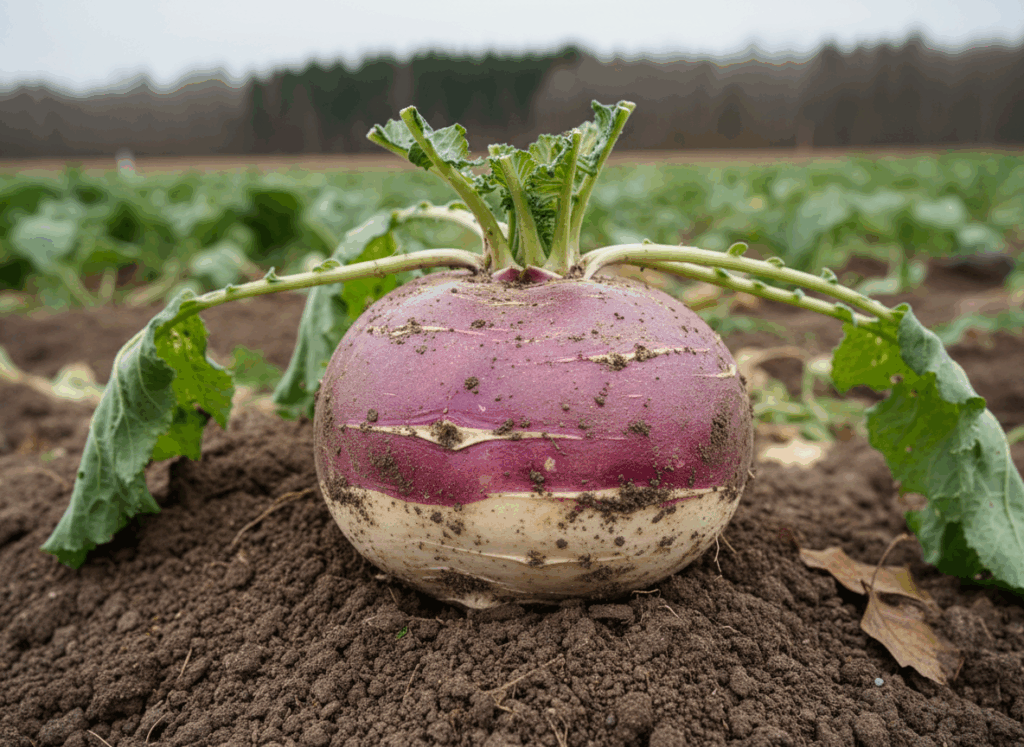
When you harvest your first Laurentian rutabaga, when you hold that globe-shaped root with its distinctive purple crown and golden flesh, you are holding more than a vegetable. You are holding a piece of Canadian agricultural heritage. You are holding the result of a deliberate act of sovereignty: the moment when a young nation said: We will breed our own crops, suited to our own conditions, for our own people.
This is the Laurentian rutabaga. This is Canadian science meeting Canadian soil. This is the sweetness of frost, the security of storage, the triumph of a crop bred to understand the north.
This is our heritage. This is our story. This is the root that runs deep in Canadian earth.
Go ahead and explore Rutabaga Seeds