
Purple Top Turnip: A Root Deeper Than Earth
How a humble vegetable became the heartbeat of Canadian survival, carrying within its seed the stories of those who dared to build home in an unforgiving land
Seeds of Hope in Uncertain Hands
Some vegetables feed the body, and then some vegetables feed the soul of a nation. The Purple Top turnip is the latter: a modest, globe-shaped root that carries within its seed the entire story of Canadian resilience, written in soil and survival.
Imagine the moment: a settler, perhaps from Scotland or Ireland, perhaps from the rolling farmlands of England or Germany, standing at the threshold of a new world. The forests are dense and dark. The winters are longer and colder than anything they’ve known. The future is uncertain, the land untamed. What do they carry with them? Not much. A few possessions. A prayer. And seeds. Precious seeds tucked carefully in pockets and pouches, more valuable than gold because they represented something sacred. They were the promise of home, the certainty of nourishment, the knowledge that even in this wild, unforgiving place, they could grow food.
Among those seeds were Purple Top turnips.
These were not new varieties, not innovations of the New World. They were old friends, varieties that had sustained European communities for centuries. They carried within them the accumulated wisdom of generations—knowledge about how to thrive in cold climates, how to mature quickly when time was short, how to store through long winters when fresh food was a memory and a dream.
The European Roots of a Canadian Treasure
The Purple Top turnip’s story begins not in Canada, but in the gardens and fields of Europe, where turnips had been cultivated since ancient times. The Romans grew them. Medieval monks preserved them in their monastery gardens. By the Middle Ages, turnips were so essential to European survival that they were as common as bread, as necessary as water.
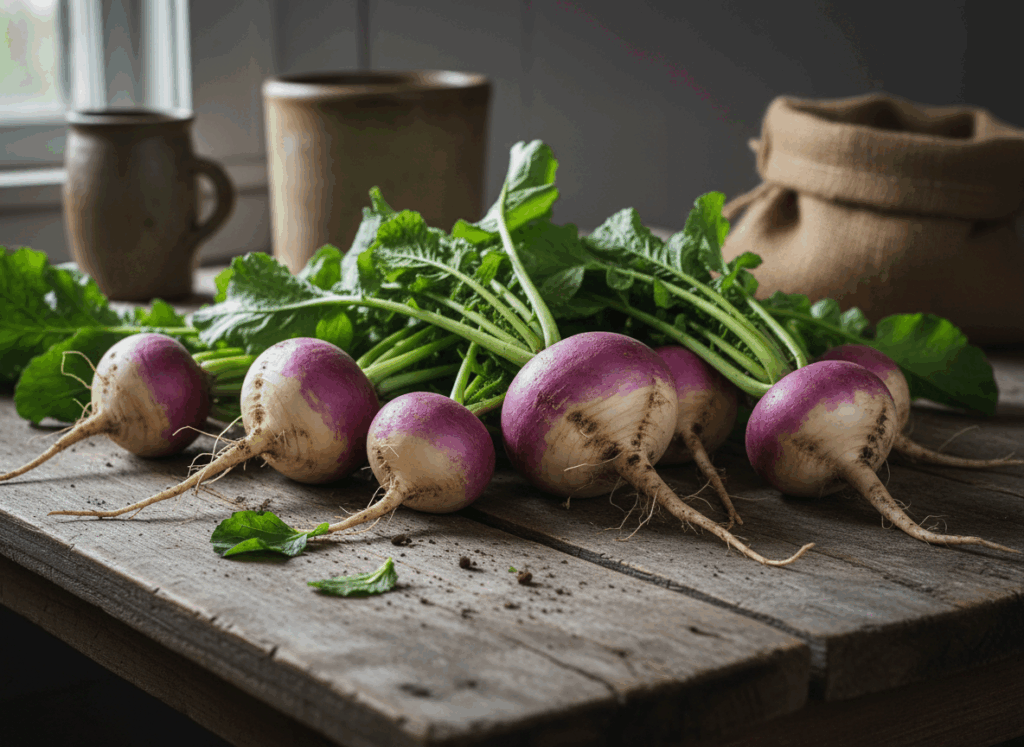
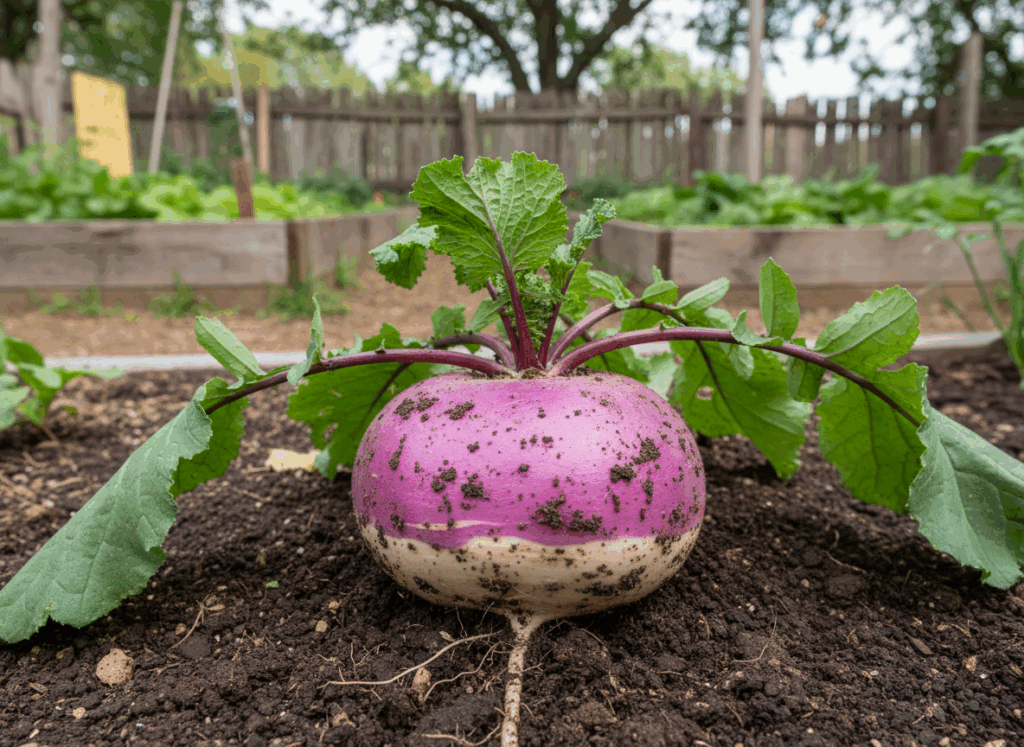
But the Purple Top as we know it, with its distinctive purple-blushed shoulders and creamy white flesh, emerged in European gardens over centuries of careful selection. Farmers and gardeners observed their turnip plants, generation after generation. They saved seed from the plants that matured fastest, that grew the sweetest roots, that stored longest, that showed the most vigour. They selected for that characteristic purple blush, that signal of readiness and quality. Slowly, patiently, through the quiet work of countless hands, the Purple Top turnip became refined into the reliable, exceptional variety that would eventually cross the Atlantic.
By the time European settlers began arriving in North America in the 1700s and 1800s, the Purple Top was already an old friend, a trusted companion, a variety so proven and reliable that it was worth the precious space in a settler’s seed collection.
The Journey Across the Atlantic
Picture the ships: wooden vessels creaking across an endless ocean, carrying people who were leaving everything they knew for the promise of something better. They carried their hopes. They carried their fears. And they carried their seeds.
The Purple Top turnip made that journey. It crossed the Atlantic in the pockets of Scottish crofters, in the carefully wrapped bundles of Irish farmers, in the seed boxes of German and English settlers. Each seed represented a connection to home, a piece of the old world they were bringing to the new.
When these settlers arrived on Canadian shores, they faced a landscape that was both beautiful and terrifying. The forests stretched endlessly. The winters were brutal and long. The growing season was short, heartbreakingly short compared to what they had known in Europe. Many crops that had sustained their ancestors would not mature in time. Corn took too long. Beans needed more warmth. Wheat was uncertain.
But the Purple Top turnip? It thrived.
The Heartbeat of Survival
As pioneers pushed westward across the prairies and carved farms out of wilderness, the Purple Top turnip became something more than a vegetable. It became a symbol of survival. A promise kept. A reason to believe that even in the harshest conditions, the earth would provide.
The turnip’s remarkable cold tolerance was legendary. It could withstand frosts that killed other crops. It matured in the short northern growing season when time was the scarcest resource. And it stored magnificently! In root cellars from Ontario to Alberta, in the cool darkness beneath farmhouses and barns, Purple Top turnips kept through the long winters. Their sweet, crisp flesh was a reminder that even in the bleakest months, nourishment was possible.
These were not luxury vegetables. They were survival. They were the difference between a family that made it through winter and one that didn’t. They were fed to livestock when hay ran short. They were sliced into soups that warmed frozen bones. They were preserved in crocks and stored in cellars, rationed carefully through the months when snow buried the land and the sun barely climbed above the horizon.
The Purple Top turnip earned its place in Canadian history not through fanfare or celebration, but through the quiet, undeniable fact of its reliability. It showed up. It produced. It sustained.
Woven Into the Fabric of Rural Life
By the early 1900s, the Purple Top turnip had become so integral to Canadian life that it was simply there as common and essential as the soil itself. It appeared at church suppers and community gatherings, sliced and served with butter and salt. It was preserved in crocks, fermented and stored for winter eating. It was fed to cattle and horses, stretching scarce feed through lean seasons. It was celebrated in harvest festivals as one of the first fresh vegetables of spring when overwintered roots sent up new growth, offering greens when the world was still frozen.
Farmers across the country saved seed from their best Purple Top plants, selecting for vigor and flavor just as their ancestors had done in European gardens. The variety evolved subtly with each generation, adapting to Canadian soil and climate while maintaining the essential characteristics that made it invaluable: cold tolerance, swift maturity, sweet flavor, and exceptional storage.
The Purple Top became woven into the identity of rural Canada. It was the vegetable of pioneers and homesteaders, of those who built the land with their own hands. It was the vegetable of resilience, of making do, of understanding that survival is not about luxury but about reliability.
A Living Connection to Our Past
Today, when you plant a Purple Top turnip seed, you are planting more than a vegetable. You are planting a connection to the settlers who carried these seeds across an ocean, who trusted them to sustain their families in an unknown land. You are planting the accumulated wisdom of centuries of European gardeners who refined this variety through patient selection. You are planting the determination of Canadian farmers who adapted it to northern soil and short seasons, who saved seed year after year, who understood its value and refused to let it disappear.
You are planting history.
You are planting resilience.
You are planting the quiet knowledge that even in harsh conditions, even when the odds seem impossible, the earth provides. The Purple Top turnip carries within its seed the story of those who came before: their courage, their determination, their refusal to surrender to an unforgiving landscape.
When you harvest your first Purple Top turnip, when you hold that globe-shaped root in your hand and see that distinctive purple blush, you are holding more than a vegetable. You are holding a piece of Canadian heritage. You are holding the story of survival. You are holding the quiet triumph of those who planted seeds in uncertain soil and trusted that they would grow.
This is the Purple Top turnip. This is our heritage. This is the root that runs deeper than earth.
Ready to check out The Purple Top Turnip?
Estimated reading time: 7 minutes